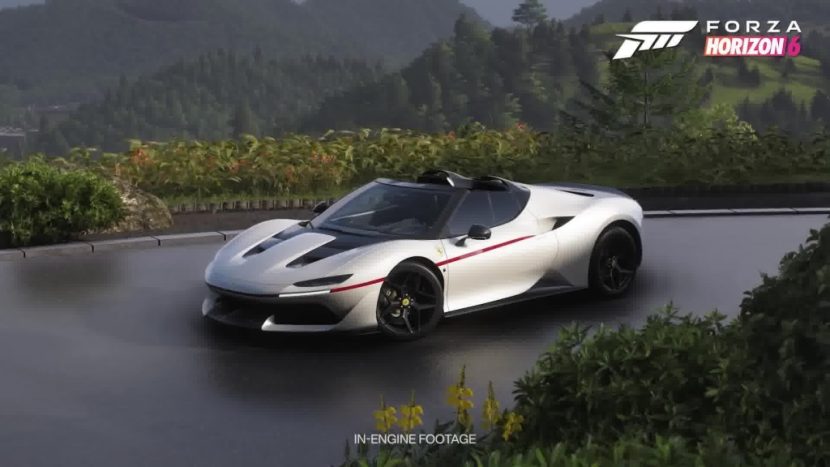
Forza Horizon 6 introduces a familiar open-world racing structure built around discovery, event completion, and progressively unlocking high-performance vehicles that are often gated behind challenge points rather than simple currency purchases. Early impressions suggest a stronger emphasis on completionist progression loops, where the most desirable cars are not immediately accessible but require targeted event grinding, skill accumulation, and specialization in different race types.
A recurring theme in early gameplay is the tension between structured campaign progression and optional endgame optimization—especially when players begin chasing specific vehicles like the Lamborghini Sterrato or Lotus Exige Time Attack variants.
Core Progression Loop Overview
At its core, Forza Horizon 6 revolves around earning points through events and challenges, which are then exchanged for vehicle unlocks and progression milestones.
| System | Function | Player Impact |
| Event Completion | Earn progression points | Unlock car access tiers |
| Skill Challenges | Earn bonus progression | Required for hidden vehicles |
| Cross-Country Races | High reward but difficult terrain | Mandatory for off-road cars |
| Speed Traps | Performance scoring | 1–3 star rating system |
| Accolade System | Completion tracking | Unlocks bonus rewards |
A notable mechanic is the auto-drive assistance system, which can reduce manual input during long traversal sections. While controversial, it becomes useful for grinding repetitive routes or positioning for event chains.
High-Value Vehicle Unlock Targets
A key driver of engagement is the pursuit of high-tier vehicles locked behind point thresholds rather than direct purchase.
| Vehicle | Requirement | Category | Notes |
| Lamborghini Sterrato | 7,610 points | Off-road supercar | Requires event chaining (win + completion) |
| Lotus Exige Time Attack | Mid-high progression tier | Track-focused lightweight build | Highly customizable |
| “X-Class” Hyperbuild (custom Exige build) | Late game tuning unlock | Extreme performance class | Up to ~1500 HP builds possible |
The Sterrato stands out as a hybrid off-road supercar designed for cross-country dominance, while the Exige variants emphasize precision handling and extreme tuning flexibility.
Event Structure and Grinding Behavior
Players frequently encounter progression bottlenecks that require replaying or completing overlooked events. This leads to an emergent “soft grind” loop where previously ignored content becomes mandatory for unlock completion.
Key observations:
- Cross-country races are often required despite being less preferred by players
- Some events require multiple completions (finish + win conditions)
- Speed traps and skill zones contribute significantly to progression gating
- Completion tracking encourages revisiting older content
This structure reinforces a late-game loop where players shift from casual racing to optimization-driven gameplay.
Vehicle Tuning and Performance Transformation
One of the most impactful systems in Forza Horizon 6 is deep vehicle tuning, which allows extreme transformations in both handling and output.
Example: Lamborghini Sterrato Build Adjustments
| Upgrade Category | Modification | Effect |
| Engine | Twin-turbo conversion | Increased power, reduced natural balance |
| Suspension | Rally suspension | Improved off-road stability |
| Weight Reduction | Partial stripping (~300kg) | Improved acceleration |
| Tires | Wide rear setup (355mm) | Increased traction |
| Aero | Forza adjustable aero | Higher stability at speed |
| Output | ~948 HP tuned build | High-speed off-road capability |
This build philosophy prioritizes versatility over purity, often sacrificing realism for competitive adaptability across terrain types.
Extreme Build Experiment: X-Class Exige Concept
One of the most exaggerated builds explored in early gameplay is a heavily modified Lotus Exige platform pushed into an X-Class performance category.
| Parameter | Value |
| Horsepower | ~1500 HP |
| Drivetrain | AWD conversion |
| Top Speed | ~190 mph (limited by tuning balance) |
| Handling | High instability at low speed |
| Use Case | Time trials, stunt driving |
Despite extreme power output, performance is constrained by gearing and stability, highlighting that raw horsepower does not always translate into usable speed in Forza Horizon 6’s physics model.
Economy Layer and Progression Acceleration
While not fully detailed in gameplay footage, the progression ecosystem is expected to intersect with in-game economic systems tied to vehicle acquisition and upgrades.
Players often reference external acceleration options such as:
- FH6 Credits
- Optional progression boosts tied to premium economy systems
- High-value vehicle acquisition shortcuts
In practice, players looking to reduce grind time may consider systems like Buy Forza Horizon 6 Credits pathways to accelerate garage expansion and experimentation with late-game builds.
This becomes particularly relevant when targeting high-tier vehicles locked behind cumulative event thresholds rather than direct purchase.
Driving Feel and Handling Model Evolution
A significant improvement noted in gameplay is the refinement of tire contact physics and steering linearity. Compared to earlier entries, the handling system appears to:
- Reduce binary “drift vs grip” transitions
- Increase mid-corner stability
- Improve throttle modulation sensitivity
- Allow more realistic weight transfer behavior
However, some inconsistencies remain in throttle scaling and top-speed calibration during extreme builds, particularly in highly modified X-Class vehicles.
Endgame Loop and Completion Pressure
Once primary vehicles are unlocked, gameplay shifts toward:
- 3-star completion of overlooked events
- Optimization of speed zones
- Full accolade progression tracking
- Experimental vehicle tuning
- Rare reward farming through repeatable events
This creates a hybrid structure between sandbox driving and structured completionism, where players self-direct their endgame objectives.
Conclusion
Forza Horizon 6 builds its identity around layered progression systems that reward persistence, experimentation, and event mastery rather than straightforward currency-based unlocks. The most compelling vehicles are deliberately gated behind performance thresholds and challenge chains, encouraging players to engage deeply with both racing mechanics and tuning systems.
The result is a game loop that increasingly shifts from casual exploration into optimization-heavy gameplay, especially once players begin chasing elite builds like the Sterrato or fully tuned Exige variants.
In this environment, progression efficiency—whether through structured grinding or optional systems like FH6 Credits—becomes a defining factor in how quickly players can reach the most extreme vehicle builds and fully experience the game’s upper performance ceiling.